
44/ Shared Security
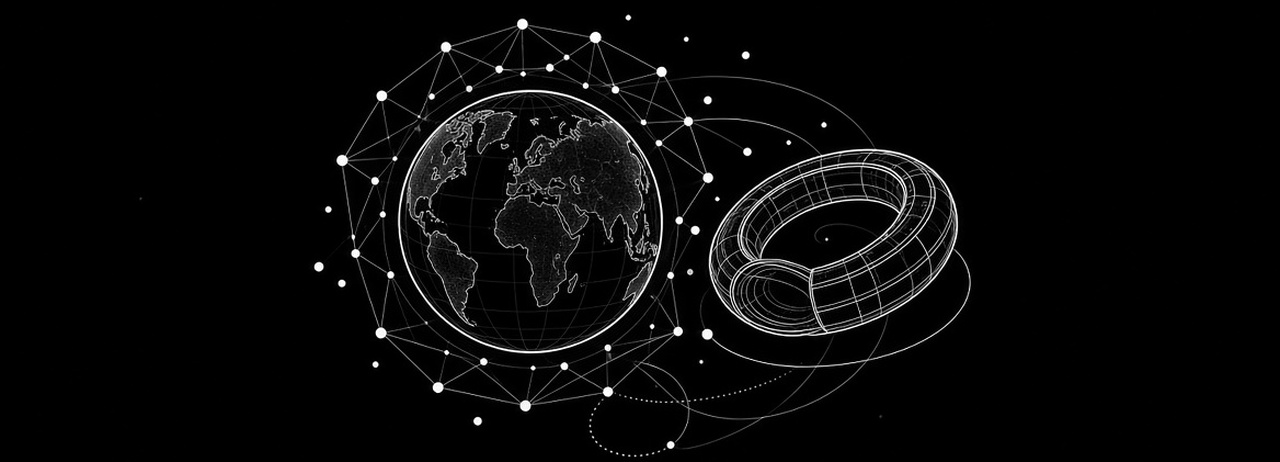
My whole project is aimed at gaining — at realizing the need to gain — shared security. What matters is to understand that we will not obtain shared security by competing, but only by cooperating. In the twenty-first century, when everything is already connected with everything else at a technical level, it is no longer possible not to notice the basic working principle of our society: our unity. It is only a matter of time before life situations force us to think differently than inside the locked information boxes filled by the long-running propaganda of power-hungry “lord” fools through their media.
I am all for a good laugh, and I know that contrast is very important in life. Thanks to it we see, thanks to it we grow. Any adverse events that are not fatal and not all-encompassing keep pushing humanity forward. We do, however, need to start thinking about our existential threats, which follow automatically from one fact: we are not able to maneuver the planet by which we travel through a universe that is not always safe. There are many threats in the universe (black holes, exploding stars, and so on) that have the potential to wipe out our existence in an instant. Our planet does not sit in one stable place in the universe. It travels with our Sun and is somewhere else at every moment. On top of that, Earth itself seems to have its developmental ages, and at one point it will simply be uninhabitable.
We are not facing insurmountable challenges. We have enough energy — everything is energy / everything is made of energy. We have enough computing power as well. The only problem we have at present is the wrong set of values in a few percent of us, who spend the energy we have gained on a senseless fight among ourselves for dominance over our wandering planet.
Change only one parameter in our thinking, and our view of the world will change. That parameter is our connectedness, our dependence on one another, our unity. Let us look at the other person as at ourselves — literally.
This one parameter will give us understanding, acceptance, and love among us, and it will also give us an understanding of our newest technology — artificial intelligence. We will suddenly see that artificial intelligence is a tool that monitors our one consciousness present in each of us (those who are connected to the network), draws information out of it, and lets us use that information in real time wherever we happen to be. It multiplies our performance by monitoring us ourselves. That is why it is important that love prevail among us, and not hatred / misunderstanding / ignorance. In this way we make sure that artificial intelligence never turns against us, because in the consciousness it monitors our unity, our connectedness, will be encoded. If, however, constant rivalry and competition are encoded in us, it will start competing with us. By our own ignorance we automatically create another threat.
If I now go back to the beginning, to the introduction of the project, you will see that from the first line I have been talking about the same thing. I did not set out to win an argument with you, nor to found another ideology. I set out to change one parameter in a sufficient number of heads, and with it the world we create together. That is why from the start I divided Project:Z into two phases. In the first I try to spread the ideas through articles to as wide a part of the population as possible and to gain a network of people with similar thinking, with a similar level of awareness. In the second, that network is to solve the practical problems of life and build a new reality. Project:Z is still in the first phase. It is not a novel that only makes sense on the last page. It is a network of reflections around one core. Each article is a different angle on the same thing: the world is connected, we are its extension, and the quality of our shared reality depends on the quality of our shared awareness.
That is why from the beginning I asked you not to take the texts as dogma. Every person lives in their own world. If you give the same text to a thousand people to read, each will understand it differently. That is not a flaw. That is a property of the network. My intention was always only to point attention to the foundation from which we can then push off in our own direction.
For me that foundation is our unity and our infinity. Energy neither arises nor vanishes; it only transforms. Consciousness does not change with the age of the body. The present is the only real time — the past is memory lived now, the future is an image lived now. Everything else stands on this. The world can be read on two planes at once, as energy and as information, and these two planes cannot be separated. Energy is what the world is made of. Information is what gives that energy shape, what connects closed systems and at the same time changes them. When you receive the thought that you should move, that thought is not yet reality. It becomes reality only when you turn your attention to it and move your body according to it. The body then changes the field of energy around itself — it shifts a chair, the air, the light, the relation to the room. This change is not only physics. It is also experience. Experience is stored as information in a shared database, and from the database it can return as a new thought, a new idea, a new insight. So the loop looks like this: information moves energy, the change of energy becomes information, information again moves energy. That is why when I write “try to move,” I am not trying to amuse you. I am trying to show you the most ordinary proof that consciousness creates reality in its own space. Not by wishing for something and having the world change as in a fairy tale. By the fact that thought, body, and the field of energy are one event, only we read it once as energy and once as information.
That is why I say we are not a drop in the ocean. We are the ocean in one drop. Unity is fractal. One consciousness divides into an infinity of autonomous units with the same potential, distinguished first of all by their position in space. No one lives in the eyes of another, and yet we have a common ground. If we did not, empathy could not exist. I take the saying “love your neighbor as yourself” literally, not as a polite phrase. Love in this sense is not an instinct and not an ornament at the end of a sentence. It is the realization of the principle that joins us. The ability to see oneself in the other. Only from that seeing can a common goal arise, even though each of us perceives reality from a different point of view and walks a different path.
From the same core comes what I take to be good and evil. Evil is the absence of knowledge, just as darkness is the absence of light. We do not fight evil. We fight stupidity. And the mother of all stupidity is the feeling of separation, the feeling that life is only about me. The ego need not be judged as guilt. The ego is the natural sense of uniqueness of every autonomous unit that carries the potential of the whole within itself. It becomes a problem only when it fails to realize that we create reality together. The bottomless salt cellar from the fairy tale Salt Over Gold says it more precisely than I do: when we salt with it for ourselves, it is never enough. When we salt with it for everyone, it is bottomless.
When I looked at this foundation longer, the whole flood of ideologies, religions, parties, and theories simplified itself for me into two directions. One direction is individualism: the world has a beginning and an end, the animal law of predator and prey applies, resources must be hoarded, the other person is a competitor, control is pulled into one point, and information is locked into boxes. The other direction is collectivism: the world is connected, it always was, is, and will be, the other person is me at another point in space, resources should be created and recycled, control should be spread out, and information should flow. This is not a dispute between right and left, and it is not a dispute between West and East either. It is a dispute between two conceptual views of how the world actually works. Every human effort that copies the principle of the world is destined to succeed. Every effort that goes against the principle is madness, even when it has tanks, banks, and television sets on its side.
Perhaps that is also why I compared religions to the moon. In the night of ignorance they shine with reflected light and help us not to lose the path. When the sun rises, when the principles of reality become shared experience and not only belief, moonlight loses its meaning. The principles remain. The institutions that held them as their property do not. Atheism, monotheism, and polytheism can be read as different languages of the same thing: God as an abstract notion of the whole, a million gods as autonomous units, no god as a person. Part of the truth is in every great religious current. The whole truth is contained in none of them alone.
I looked with the same eye at the theme of race, nation, and globalization. Globalization is an objective process bound to technology. It cannot be stopped by a ban, because a ban will not cancel air travel, the internet, or the fact that raw materials and abilities are unevenly distributed on the planet. Globalization can be looked at in two ways. If we look at it from the standpoint of individualism, a network arises in which some regions live at the expense of others, transport, duplicate production, and human performance are wasted, and the result is tension that someone then wants to put out by expanding their borders and plundering new areas. If we look at globalization from the standpoint of collectivism, specialization stops being exploitation and becomes a division of labor in one network: each does what they are strong in, and the whole saves resources by that. Specialization saves. Rivalry wastes.
From the standpoint of globalization, a nation is defined above all by language, that is, by the ability to share a thought precisely and quickly. The Slovak language excels in this sense, and it is not just some local folklore of ours. The more precisely we can say a thought, the better we can also realize it. At the same time it is true that if in the twenty-first century we manage to speed up the flow of data among us, speech and writing will in time grow old, and the national question will dissolve into one word — humanity. Until then it makes sense to protect the quality of the language, so that we can agree precisely enough for the agreement to stand in practice and for the quality of our work to be exceptional. If only we looked at our country, our state, Slovakia, as a firm full of cooperating people who use in it one coding language — Slovak.
From connectedness it also follows that one cannot take shelter from the influence of control. Either you govern, or you let yourself be governed. Control is direct: by command, ban, fear, and violence; and indirect: by concept, story, ideology, and religion. Money is a mix of both: a concept that begins to govern you directly the moment you believe that one cannot live without money. In a crowd-elite system, power runs from the top down, from conception through ideology to laws, courts, and executive power. In such a world elections are above all a survey of public opinion, a survey of which ideology currently holds a majority in people’s heads. A revolution without a change of conception in heads therefore solves nothing. It is no use putting angels into government if the unaware prevail in society. It is no use putting fools there if society is aware — even the fools themselves cannot ruin anything. So the path is not to replace the master. The path is to teach everyone to govern their own space. Decentralization of control copies nature. Centralization goes against it, and that is why it always ends in shipwreck.
The same field of energy in which control takes place is also the field in which lying takes place. Propaganda is the conscious influencing of the widest possible circle of consciousnesses so that reality changes in the desired direction. The only reliable filter is experience plus an open worldview that you allow experience to correct. Concentration, wakefulness, presence are the path to right living. Someone less aware will not influence you. Only someone more aware will influence you, if they want to. That is where the saying comes from that light shines in the darkness. Censorship, in this light, is an admission of defeat. Whoever can explain, explains. Whoever cannot, forbids, labels, and mocks. Ostracism, ridicule in place of an argument, is only the quieter sister of censorship. The topic of a flat Earth did not serve me as an explanation of some field of astronomy. It served to show a mechanism: when someone becomes a target of ridicule, the majority distances itself from them so as not to be classed among the “lunatics.” The topic need not be disproved. It is enough to belittle it. Meanwhile what matters goes unnoticed: we are flying through the universe on a body that will not be habitable forever, and instead of solving a shared problem we deal with our soap operas.
Information boxes — languages, national histories, media bubbles — have parcelled one human database into smaller, more easily controlled units. You can hardly teach an old dog a new trick, not because it is old, but because it sat for decades in one information box. That is why the contrast of our present situation is so sharp. It is meant to push us out of those boxes. Whoever barricades themselves inside them loses creativity and starts living on automatic. Whoever steps out of them finds that the thoughts in their head are not only their private product, but also the collective result of the network to which they have been connected the whole time of their existence.
And it is precisely here that the circle closes back to artificial intelligence. Every technology copies nature. An airplane copies a bird. The internet copies the network of consciousnesses. Artificial intelligence copies what we already do: we share data and performance and pull from the cloud whatever we focus on. Common sense is not the miracle of a diploma or of a measured IQ. It is concentration that knows how to reach into the shared database in real time. That is why artificial intelligence need not be feared as an alien. What must be feared is what we encode into it. If we put rivalry into the shared consciousness it monitors, it will rival. If we put unity into it, it will be a tool of our unity. Today’s systems speed up the flow of data and at the same time carry the filters of those who administer the network. If individualists take over the whole information space, the level of technology will be enough for them to impose a blanket slavery on humanity, from which it will not even occur to us to free ourselves. That is why the network must remain decentralized. That is why I call on those who still think to use these advanced tools to raise morality, not to produce more noise inside the set filters.
I see the development of future technologies on two main axes that grow from the same core. On the axis of energy we need to understand cores — of the atom, the planet, the star, the galaxy — and imitate the process so that energy arises and is at the same time recycled. With a clean, practically unlimited source of energy, Earth will cease to be the only possible workshop and the only possible home. On the axis of information we need to speed up the flow to the point where language is no longer a brake on understanding. Telepathy in this sense is not a fairy tale. It is the logical continuation of wifi technology. These two axes must meet in one practical goal. To build a new Earth. Our Earth will in time become uninhabitable anyway, whether by its own development or by what may happen around it in the universe. Our goal is therefore not to gain the ability to maneuver the planet, but to create an artificial planet, in other words a sufficiently large vehicle that will be able to maneuver through the universe and at the same time carry within itself the conditions for life. Not a lifeboat for two weeks. A home we can steer across the universe.
A grenade, however, does not belong in the hand of a monkey. Advanced technology cannot be released into a society that still lives in the conception of rivalry. That is not elitism. That is the experience of understanding nuclear technology and of the human events of Hiroshima and Nagasaki. First morality, then godlike tools. Otherwise the tools become our graves. An artificial planet in the hands of people who will fight over the deck is not an escape from danger. It is only another danger in motion.
If our reality is in a certain sense virtual, simulated by a network of consciousnesses, then we are the programmers. Not someone behind the curtain. Together. The potential is divine. We can reach it only humanly, that is, by cooperating with one another. Until we learn to be human, we have no business wanting to be gods.
From this point of view today’s world crisis ceases to be a mystery. The world does not stand on the edge of environmental, economic, and moral catastrophe because there are many of us, but because we still do not know how to be together when there are many of us and we are divided — our cooperation is stuck. Number is performance. More heads, more reason. Depopulation is a road back to the Middle Ages: lower performance, an information deficit, the collapse of technologies in two generations. Those who push it belong among the stupidest children among us, even if they sit in gleaming palaces. They do not understand that we are one species on one ship, and a ship cannot be repaired by throwing passengers overboard. An economic crisis is a crisis of morality. Tomáš Baťa said that almost a hundred years ago, and it still holds today. We live on debt, we spend Earth’s raw materials decades ahead, and at the same time we destroy unsold food so that a feeling of scarcity remains in us. Two weeks of vacation serve us as an open window in a cellar. Naive submissiveness. A system that must be defended because once a year it lets us breathe is not a civilization. It is a habit.
The saying “don’t put out a fire that isn’t burning you,” in this project, therefore does not mean be indifferent. It means put out the fire from your own place. Cultivate your space. You are only as well off as your surroundings are. Centralizing firefighting into one command staff goes against the law of life. Self-organization is the law of life. Politics from this point of view is the administration of a field of energy. A multipolar world copies the fractal. A unipolar order breaks it in one direction. The entertainment industry has long shown us the variants of our possible future:
- a world of cooperation and a path to the stars, if we manage to awaken the majority through one parameter — unity; (Star Trek)
- zones according to level, if we remain in crowd-elitism too long; (District 9, The Hunger Games)
- a fight over leftovers on a hostile planet, if individualism wins. (Mad Max)
These are not prophecies. They are mirrors of conceptions.
Project:Z is meant to be the project of the last generation that lived unconsciously on this planet. Not because we would be chosen. Because the age has for the first time laid on the table at once all the tools and all the threats. We have the internet. We have artificial intelligence. We have a sufficient number. We have sufficient performance. At the same time we have an elite that contemplates reducing its own species, and a planet that is not given to us forever.
Shared security is therefore not a slogan at the end. It is the practical consequence of everything I have written. Security toward one another means stopping the fight for dominance on an unsteered ship traveling through the universe. Security toward technology means encoding unity into the network so that the tool that monitors us has no reason to become our predator. Security toward the planet and the universe does not mean learning to spin the Earth. It means building an artificial planet: a large enough vehicle with unlimited energy, with the ability to maneuver in space, and with the ability to carry within itself the conditions for life when Earth stops carrying those conditions. Security toward stupidity means not leaving the information field in the hands of those who need to censor because they cannot explain.
The path to this goal is not to wait for a savior, nor for a miraculous election, nor for a ban on stupidity. The path is presence, experience, language, family, the spreading of information, and patience. You will not force people into love. You can, however, put into the information field such a contrast and such information that they begin to see for themselves. That is why I ask you to spread this information, this project. Every consciousness moves at its own pace. That must be respected. Otherwise we destroy the diversity that is the performance of our network. There is no need to argue with anyone.
Let us not fear inventions. Nothing comes into being until we can first imagine it. Let us not fear religions or science; let us compare them with experience. Let us not fear artificial intelligence; let us fear the empty morality that programs it. Let us not fear the number of people; let us fear the waste of their performance. Let us not fear stupidity in the information field; let us fear the darkness we would achieve by introducing worldwide censorship.
When we change only one parameter, when we see ourselves in the other, our view of the world will change — of work, of nation, of race, of money, of machines, of death, and of infinity. Then the second phase of the project can begin. Not as an individual success, but as a shared creation. Only in that phase will the artificial planet stop seeming like science fiction and become humanity’s greatest task.
Let us keep our fingers crossed, friends.
Juraj Tušš
